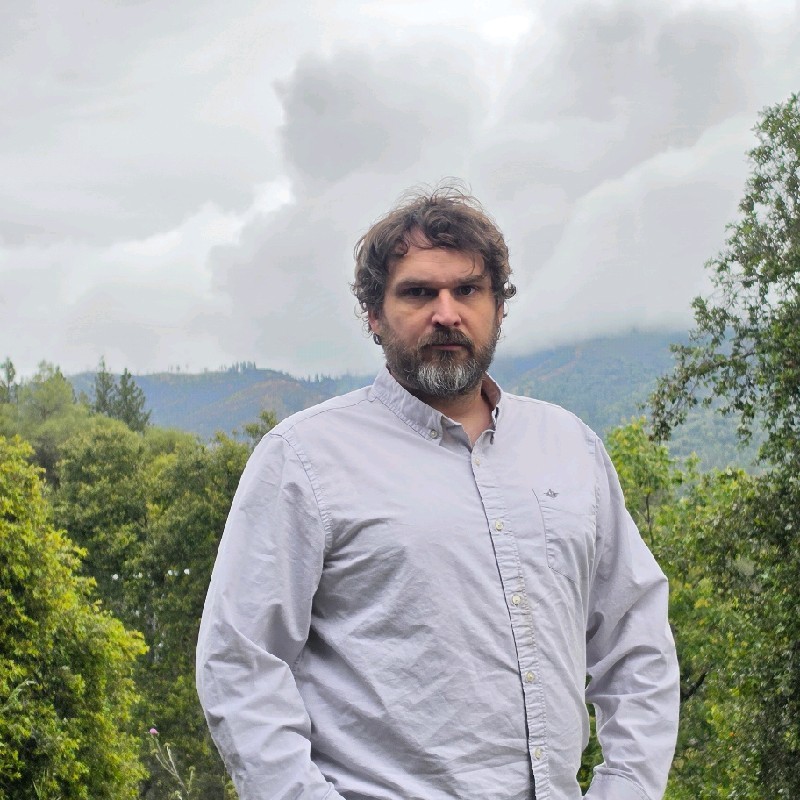
Fourteen years wearing the uniform taught me things no certification ever could
Before there was Diffidentia, there was a young man who raised his right hand and swore an oath to protect something larger than himself. Fourteen-plus years in the United States Army will change how you see the world. It will teach you discipline, yes — but more than that, it will teach you what it actually means when a system fails and real people pay the price.
The Army is also where the security career quietly began. Working in signals intelligence, Michael spent years learning to track adversaries through noise, read patterns in data that most people would never think to look at, and understand that in any conflict — physical or digital — the side that controls information controls the outcome. That perspective never left when the uniform came off.
"In the military, a misconfiguration is not just a ticket in a queue. It is a gap in a defense that someone, somewhere, will eventually find."
Every firewall rule left too permissive, every default credential left unchanged, every vulnerability left unpatched — Michael sees it through the same lens forged in service: a gap in a perimeter that will be tested. Not if. When.
Watching the same mistakes happen in boardrooms that happen on battlefields
The transition from military service to a civilian cybersecurity career was not a pivot — it was a continuation. The adversaries changed. The stakes stayed the same. Over 18+ years Michael moved through the full arc of the profession: starting as a SIGINT analyst and threat hunter — learning how adversaries behave before most defenders even know they are in the network; evolving into red team infrastructure and penetration testing — actively breaking systems across government, fintech, and healthcare; and ultimately into security engineering and infrastructure hardening as a Cyber Network Defender — building the controls that make the attackers' job hard. Each phase informed the next. All of it shaped Diffidentia.
The pattern he kept seeing across government, enterprise, and fintech was consistent and frustrating: organizations were not being breached by sophisticated nation-state actors using zero-days. They were being breached by misconfigured cloud storage buckets, by firewall rules nobody reviewed in three years, by source code that went to production with hardcoded credentials still in it. A government agency with a nine-figure security budget. An enterprise with a CISO and a team of thirty. A fintech startup that had just closed a Series B. Preventable. Every single time.
Michael holds an extensive portfolio of industry certifications earned across his career, spanning offensive security, defensive operations, intrusion analysis, and enterprise architecture:
The name means something
Diffidentia is Latin for distrust — specifically, a careful, disciplined skepticism. It is the opposite of assuming everything is fine because nothing has broken yet. It is the security mindset the Army instilled, and that nearly two decades of professional experience reinforced: trust nothing at face value, verify everything, and never let familiarity breed complacency.
The tool carries that philosophy through everything it does. When you connect a firewall config, it does not assume the rules are correct because they have always been there. When it reviews source code, it does not give credentials a pass because they look like placeholders. It questions. It verifies. It flags.
"I did not build Diffidentia for companies with eight-figure security budgets. I built it for the startup that just went to production, the small business holding customer data on a shoestring, the nonprofit that cannot afford a breach and cannot afford to ignore one either."
That is who this is for. The organizations who need security the most and have historically had the fewest tools to pursue it. That is the gap Michael spent 18+ years watching exist, and decided to do something about.
Principles forged in service
Ready to question everything?
Diffidentia is ready to be your managed security partner. Reach out to discuss how we can help protect your organization.
Get in touch